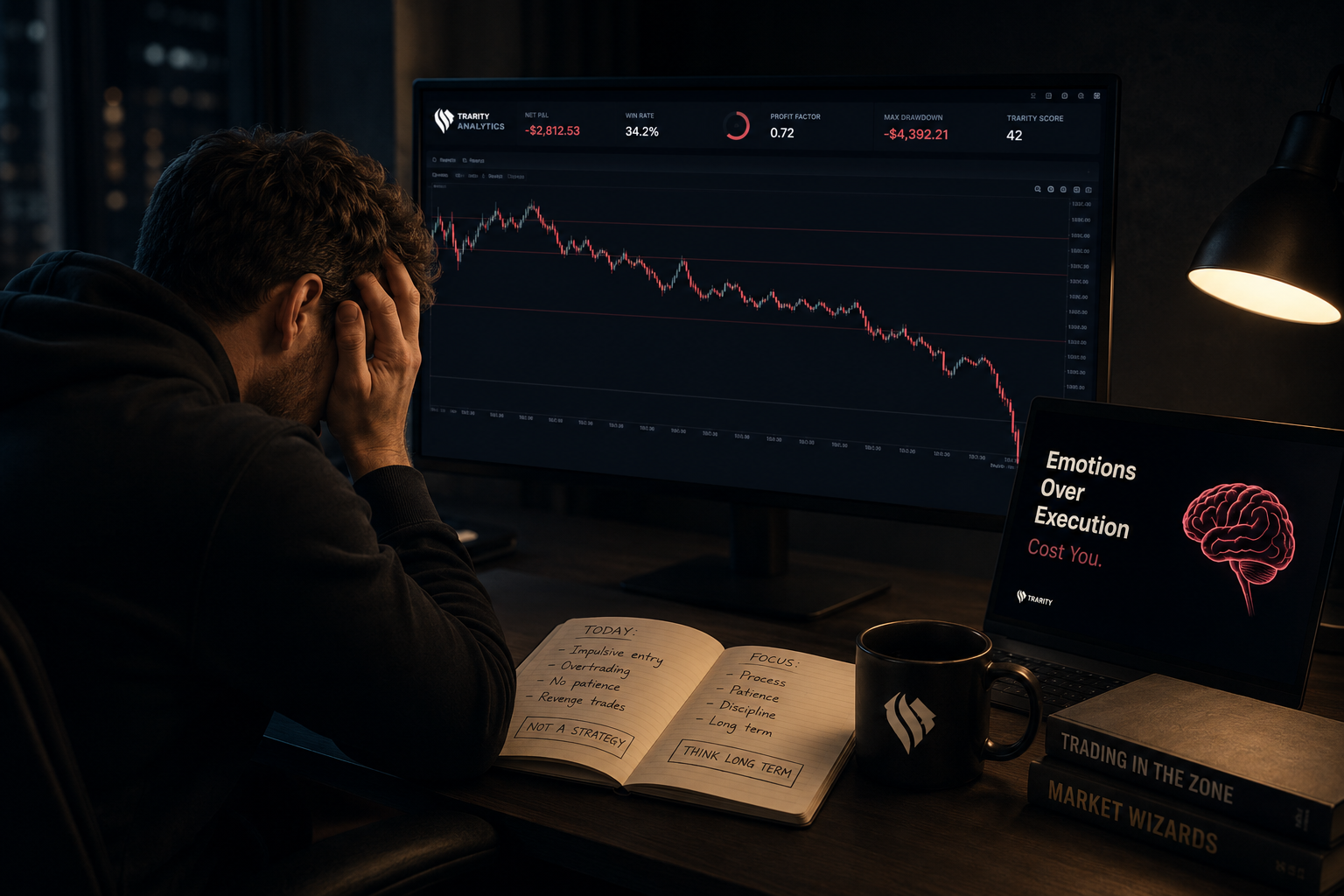
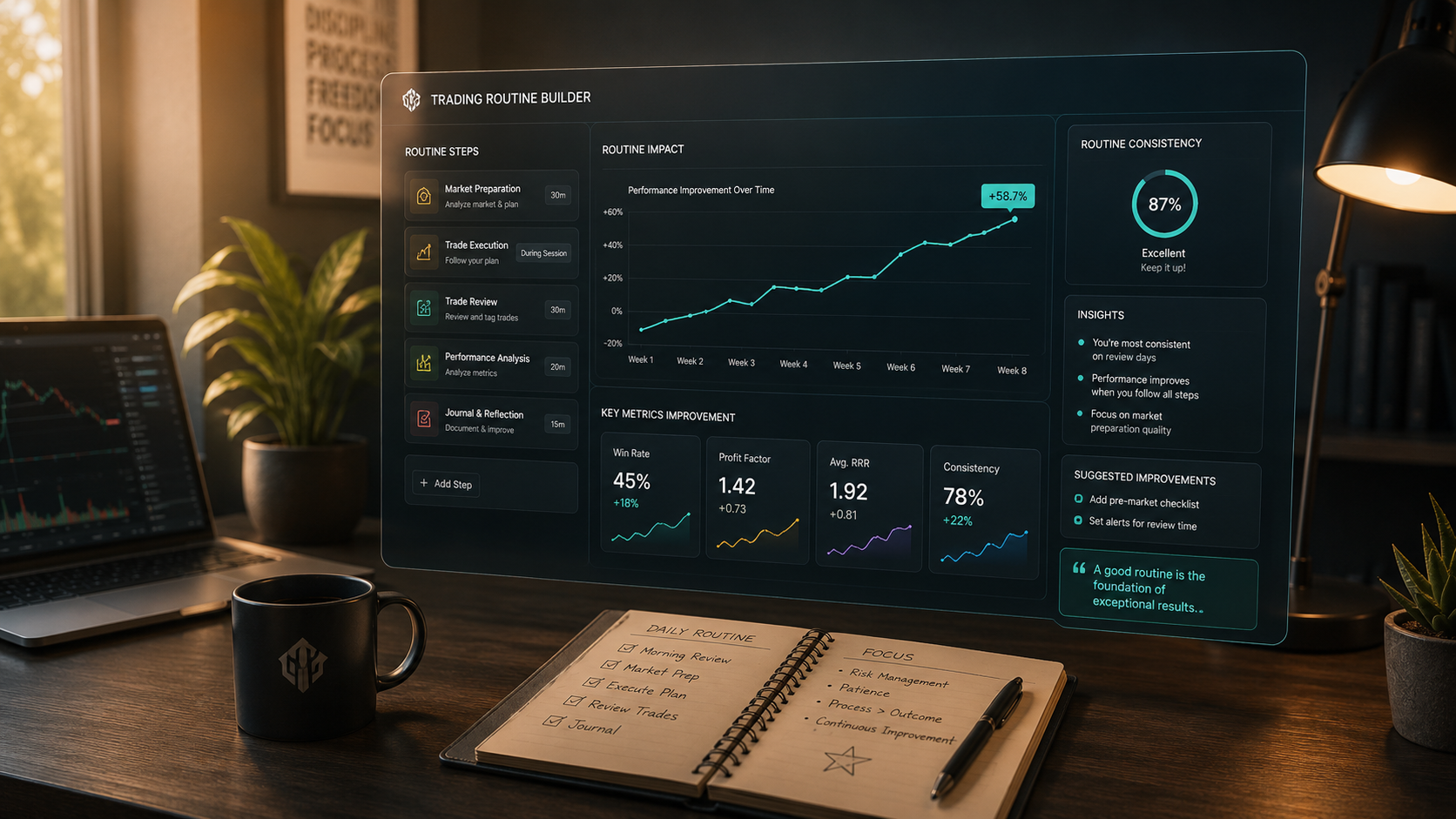
A good trading routine is one of the highest-leverage upgrades for performance. It reduces random decisions, protects risk, and creates a consistent feedback loop that turns daily sessions into long-term skill growth.
Routines Beat Willpower
Most traders underestimate how fast discipline collapses under stress. In a volatile market, your brain defaults to speed and emotion, not logic. That is why relying on willpower alone usually fails after a few losing trades or missed moves.
A routine solves this by reducing how many decisions you need to make in real time. If your prep checklist, risk limits, and execution criteria are predefined, you are not improvising when pressure rises. You are following process.
The strongest routines are simple and repeatable. They do not try to control the market. They control trader behavior. Over weeks, this structure protects you from revenge trading, impulsive entries, and inconsistent sizing.
Pre-Market Routine
Your pre-market routine is where you build clarity before speed takes over. Start by checking overnight price action and the broader market context: trend direction, key levels, and any unusual volatility shifts that could affect your setups.
Then review the economic calendar and mark high-impact events. Many traders get trapped because they forget when data drops are scheduled and get caught in avoidable whipsaw. Event awareness should be non-negotiable.
Next, lock in your risk guardrails for the day: daily loss limit and max trade count. If these numbers are not defined before the opening session, they become flexible under pressure. Flexible limits are usually no limits.
Before the bell, read yesterday's journal and identify one behavior correction for today. End with a quick mental readiness check: sleep, stress level, focus score, and whether you are emotionally fit to execute your playbook.
During-Market Execution
Execution should be boring on purpose. Trade only setups that are already in your playbook. If a setup cannot be named and matched to criteria in seconds, it is not a trade; it is an impulse.
Use a short checklist before every entry: setup quality, risk amount, invalidation level, and target logic. This 10-second pause is often the difference between planned risk and emotional risk.
Log trades immediately after entry and exit while details are fresh. Add one sentence on why you took the trade. That single line creates accountability and makes post-market analysis far more useful than retroactive guesswork.
In fast sessions, your goal is not to be perfect. It is to stay compliant. Process compliance has a compounding effect on results, while reactive execution creates hidden variance that eventually damages your equity curve.
Post-Market Review
Post-market review is where improvement happens. Score each trade from 1 to 5 on execution quality, independent of outcome. A green trade can still be poorly executed, and a red trade can be textbook execution.
Tag every trade by setup type and mistake type. Over time, this reveals which setups actually hold edge and which behavioral errors repeat most often. Without tags, your review becomes vague and memory-driven.
Write one sentence on what you would improve tomorrow. Keep it specific and actionable. "Be more disciplined" is not actionable. "No second entry after two stop-outs in same setup" is actionable.
Finally, compare daily P&L to expectation, not fantasy. The objective is to evaluate whether your process matched plan. If your process was clean, a small red day can still be progress.
Weekly and Monthly Reviews
Daily review prevents drift, but weekly review finds patterns. At the end of each week, capture your top three lessons, your worst trade, and every rule violation. This gives you a focused improvement agenda for next week.
Monthly review moves from single trades to system-level performance. Study equity curve shape, key metric trends, and strategy-level results. If one setup is carrying all profits while another bleeds, adjust allocation and attention accordingly.
Quarterly review is for playbook adjustments, not emotional resets. Update rules only when data supports the change. Frequent rule edits based on recent P&L usually create instability instead of improvement.
Common Routine Mistakes
The first mistake is making the routine too complex. If your checklist is long and friction-heavy, you will abandon it when market speed increases. A routine must be practical under real conditions, not ideal conditions.
The second mistake is not tracking compliance. Traders often track P&L but ignore whether they followed process. Compliance is the leading indicator. P&L is a lagging indicator.
The third mistake is skipping review on green days. Many traders review only when they lose, which hides risky habits that happen to work short term. Winning with bad process still needs correction.
The fourth mistake is changing the routine every week. A routine needs enough repetition to generate reliable feedback. Keep core structure stable and iterate from data, not mood.
Automate your post-market review
Trarity imports your trades and prepares a daily summary with P&L, tags, and AI coaching feedback. Free for 30 days.
Start for free arrow_forwardFrequently Asked Questions
Most routines take 45 to 90 minutes outside market hours: pre-market prep, brief in-session check-ins, and a focused post-market review. Keep it short enough to do daily, and structured enough to drive real decisions.
Review setup quality, execution quality, risk sizing, and whether you followed your plan. Add one sentence on why you took the trade so your later review is grounded in what you actually saw in the moment.
Yes. Professionals use routines to reduce decision fatigue and increase consistency. They treat routine compliance as part of risk management, not as optional admin work.
Simplify your process, reduce size, and focus on checklist compliance over P&L recovery. During losing streaks, routine discipline is the fastest path back to stable execution.
Keep the structure stable, but adapt predefined variables like acceptable setups, position size, and daily limits. Stable structure with controlled adaptation performs better than frequent routine overhauls.
This article was created with the help of AI and reviewed and edited by the Trarity team.