A profitable strategy can still fail because of execution and behaviour. Most traders who lose money do not have a strategy problem - they have a discipline problem. This guide breaks down the most common trading mistakes that sabotage results and shows how to identify and fix them.
Poor Risk Management
Poor risk management is one of the fastest ways to turn a valid edge into a losing outcome. Traders often risk too much per trade, size positions inconsistently, and trade without a maximum daily loss rule.
Even with a 60% win rate, oversized losses can bleed capital faster than winners can recover it. Clear rules for risk per trade, daily loss limits, and position size create the structure your discipline needs.
Revenge Trading
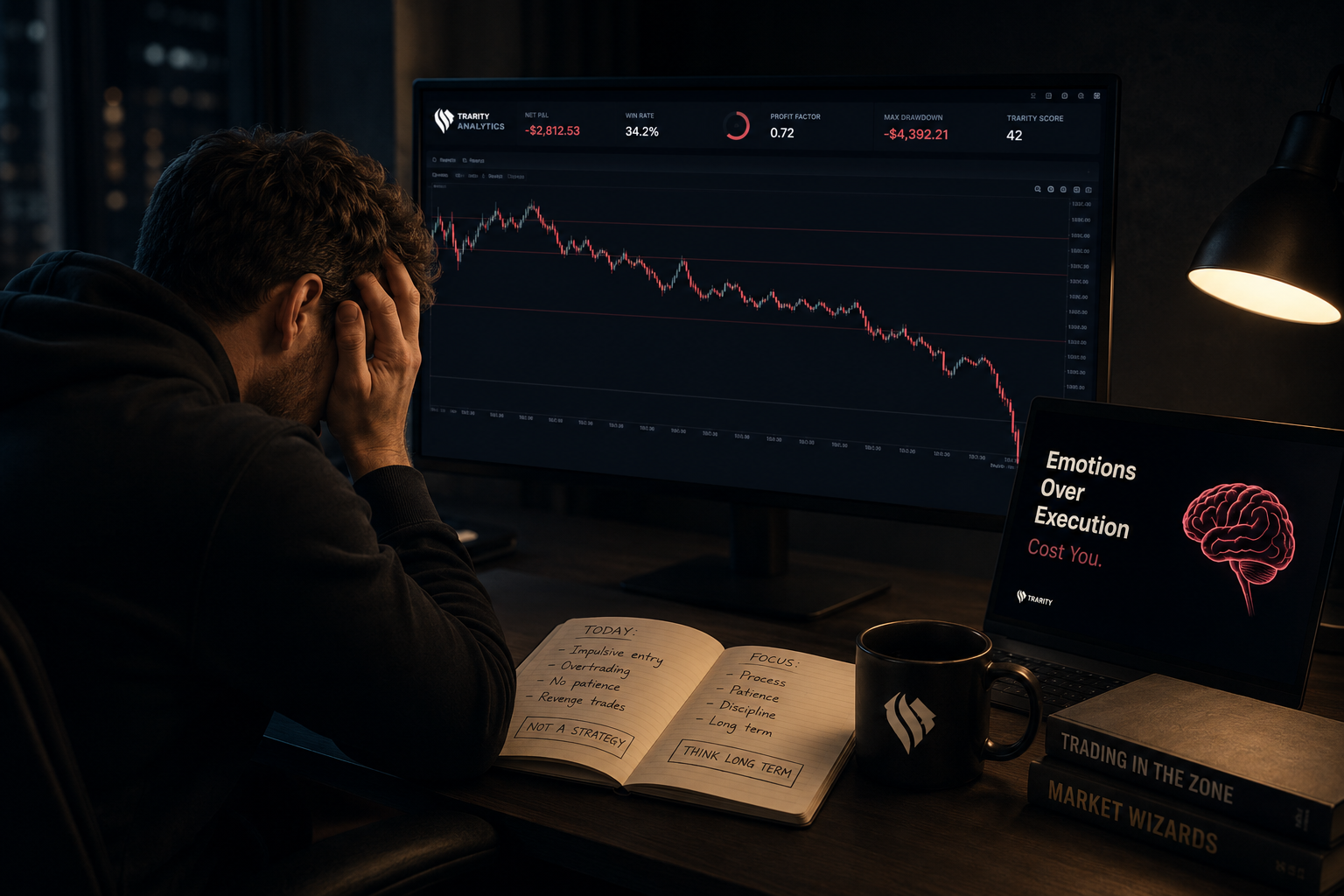
Revenge trading is taking an impulsive trade right after a loss to win the money back quickly. It is one of the most expensive trading psychology mistakes because the trade is driven by emotion, not analysis.
One revenge trade often leads to another. A single emotional trade can become a chain that compounds damage in one session.
The fix is a structured trade review process after losses. Reviewing execution before placing the next trade breaks the emotional loop and restores decision quality.
Overtrading
Overtrading means taking too many trades, often low-quality ones that do not match your edge. It is typically driven by boredom, FOMO, or the need to always be in the market.
When quantity becomes the goal, setup quality drops. Fewer, higher-conviction setups usually produce better expectancy than constant activity.
Moving Stops
Moving a stop-loss after entry - widening it or removing it entirely - is a common emotional mistake. The psychology is simple: hope that the market will come back.
That hope removes your predefined risk boundary. Small planned losses become large unplanned losses that can threaten the account. This single habit can erase weeks of disciplined execution.
Exiting Winners Too Early
Many traders cut winners early because they fear giving back unrealized gains. Over time, your average winner shrinks and profit factor drops. The strategy may still have edge, but execution no longer allows it to play out.
Let your plan dictate exits, not short-term emotions. A strong system needs both controlled losses and full-size winners.
Taking Low-Quality Setups
Trading when conditions do not match your edge - boredom trades and "it looks close enough" trades - distorts results and makes valid strategy performance hard to evaluate.
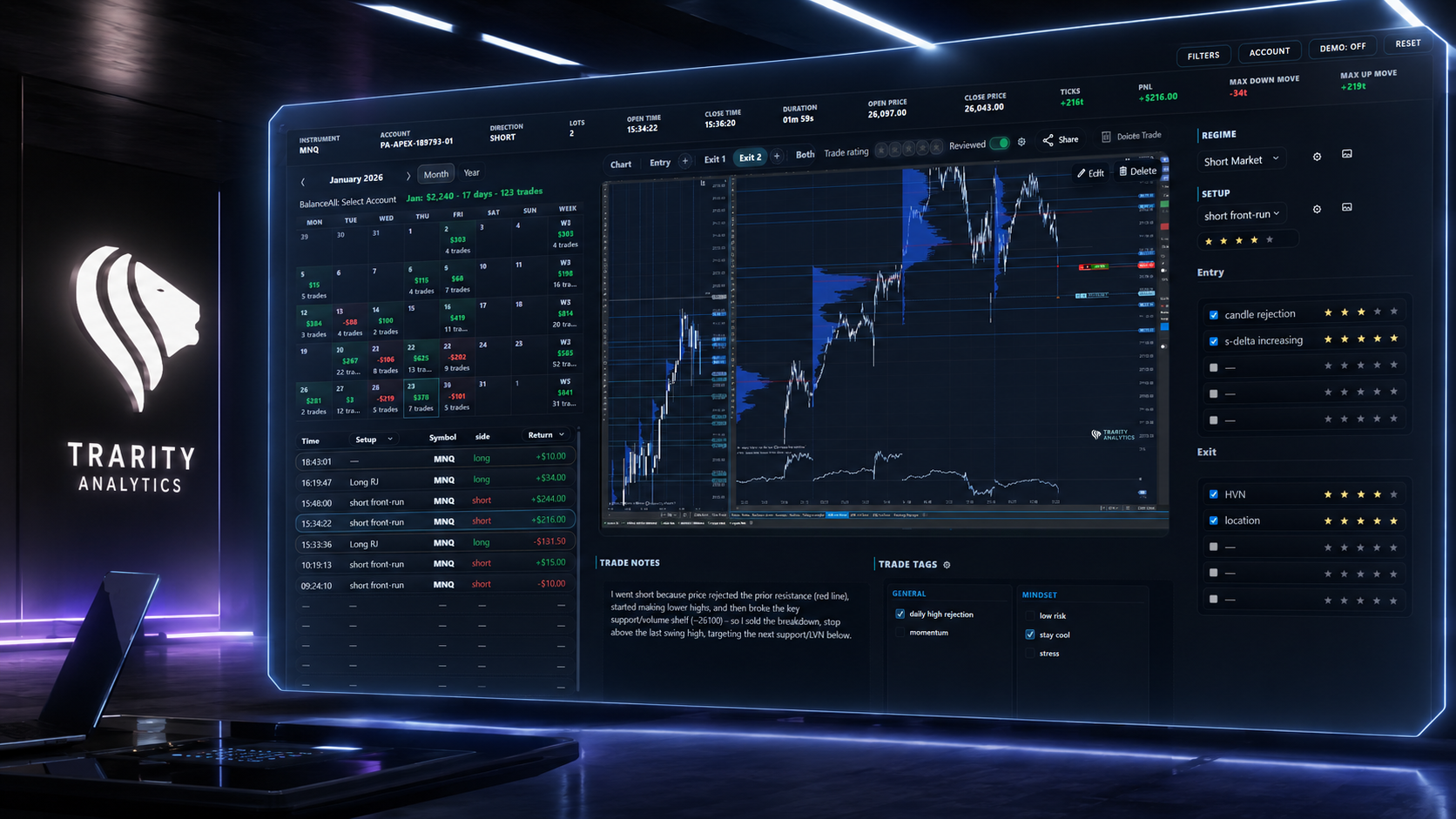
Use trade labeling to tag setup quality and review which conditions actually produce edge.
Not Reviewing Trades Properly
Most traders skip post-trade review entirely. They record P&L, move on, and repeat the same mistakes next week. Without review, mistakes repeat indefinitely.
A structured review process turns losses into learning. See the guide on how to review trades.
How to Find Your Mistake Patterns
Every trader has recurring leaks. Your mistake patterns might cluster around specific times of day, emotional states, or setup types.
When you can name your recurring pattern, you can build a specific rule to prevent it. Specific rules beat generic motivation.
Use a trading journal to tag errors and filter by pattern. An AI trading coach can surface recurring behavioral patterns that are hard to spot manually.
How a Trading Journal Fixes Behaviour
A trading journal creates accountability and a reliable feedback loop. Tag each trade with emotions, execution mistakes, and setup quality, then review weekly.
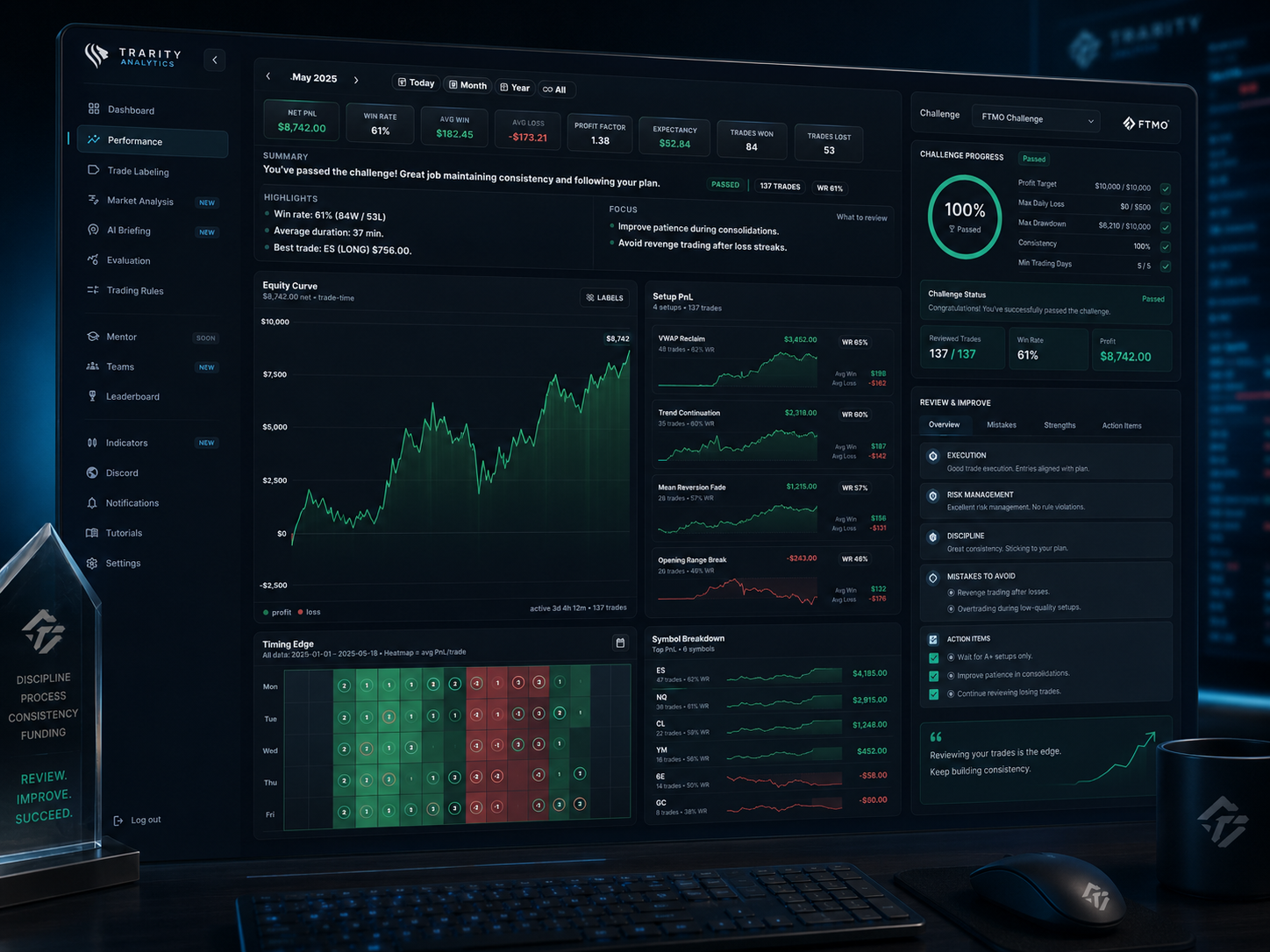
With Trarity, mistake patterns are tracked automatically and behavioral leaks are highlighted against your real trade history.
- 01Poor risk management turns small losses into big ones
- 02Revenge trading compounds damage after a loss
- 03Overtrading dilutes edge with low-quality setups
- 04Moving stops removes your safety net
- 05Exiting winners early shrinks profit factor
- 06Trade labeling reveals which setups actually work
- 07A journal turns mistakes into actionable patterns
Find the mistakes costing you money
Track your trades, tag your mistakes, and let Trarity's AI coach surface the patterns you can't see. Full access for 30 days - no card required.
Start for free arrow_forwardFrequently Asked Questions
Most traders lose money because of behavioural mistakes - not bad strategies. Poor risk management, revenge trading, overtrading, and emotional exits consistently erode edge over time.
Revenge trading is taking impulsive trades immediately after a loss to recover money. It usually leads to larger losses because decisions are driven by emotion rather than analysis.
Set a maximum number of trades per day, define clear setup criteria before the session, and use a trading journal to review whether each trade met your rules. Quality beats quantity.
Yes. A strategy with a proven edge can still lose money if execution is inconsistent. Moving stops, cutting winners short, and taking setups outside your rules all degrade performance.
A trading journal creates a feedback loop. By logging trades with tags for mistakes, emotions, and setup quality, you can review patterns over time and address the specific behaviours that cost you money.
This article was created with the help of AI and reviewed and edited by the Trarity team.