
Most traders keep a trading journal — they log entries, exits, and P&L. But simply recording trades is not the same as reviewing them. A proper trade review is what separates consistently profitable traders from those stuck on a plateau.
The difference between journaling and reviewing is intention. Journaling captures data. Reviewing extracts lessons. Without a structured post-trade analysis, you're just collecting numbers without ever learning from them.
Why Reviewing Matters More Than Journaling
- Journaling = data capture. Reviewing = pattern recognition.
- Most traders repeat the same mistakes because they never systematically analyze what went wrong.
- A structured performance review reveals blind spots: overtrading, poor timing, emotional entries.
- Traders who conduct regular reviews improve consistency within weeks.
Step 1 — Review the Setup
Before you look at execution, start your post-trade analysis with the setup.
- Was there a valid setup according to your trading plan?
- Did you follow your criteria, or did you take a "gut feeling" trade?
- Were market conditions favorable (trend, volatility, session)?
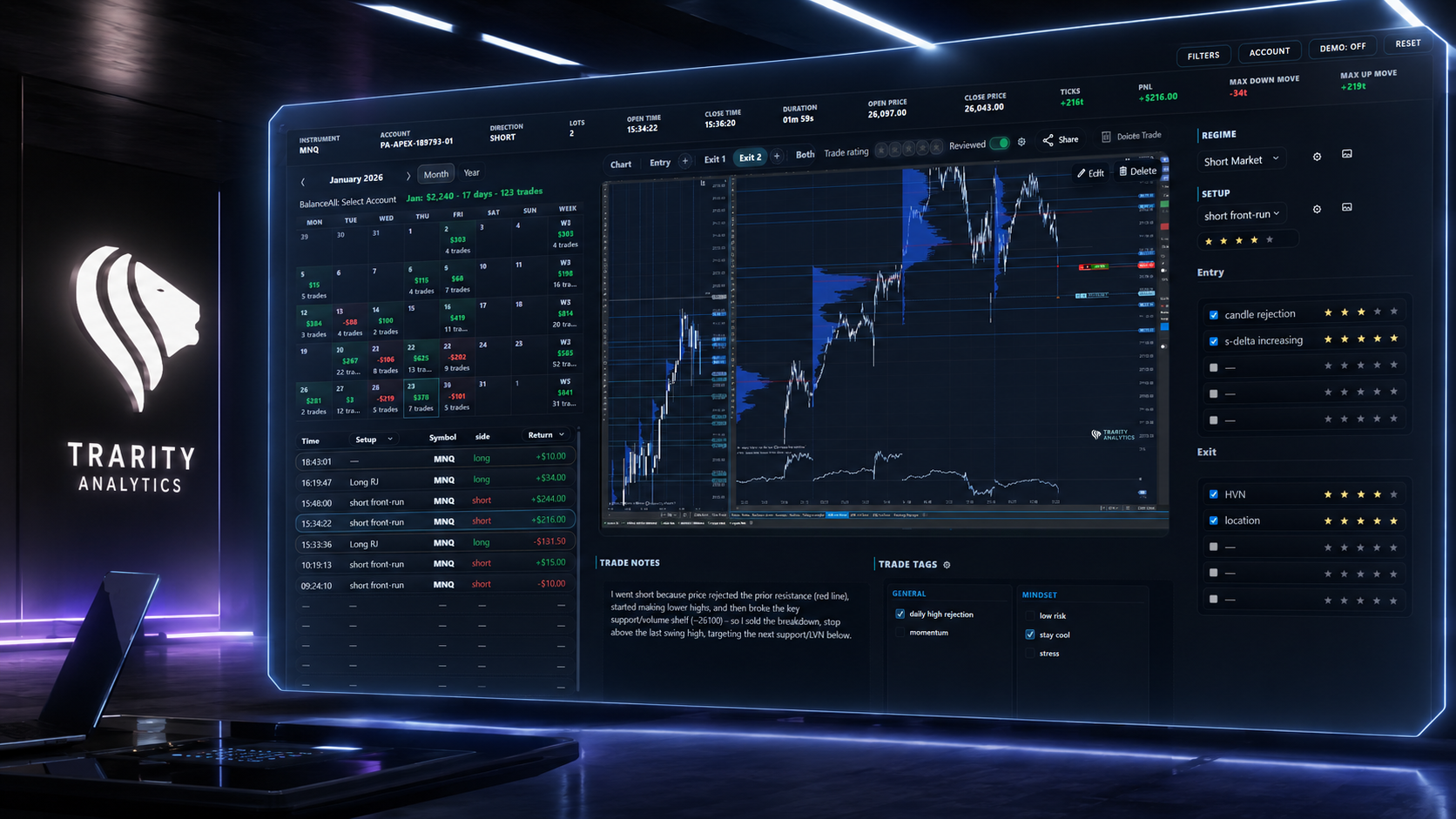
Take trade screenshots of your chart before entry so you can review what you actually saw versus what you remember.
Using trading analytics software can help identify your setup quality over time by highlighting which patterns actually yield positive expectations.
Step 2 — Review the Entry
Once you verify the setup was sound, review entry quality.
- Was your entry based on your plan or impulse?
- Did you enter at the planned price, or did you chase the move?
- Was your timing optimal — too early, too late, or on point?
- Did you use the correct position size?
Track your entry quality score across trades to spot recurring timing issues.
Step 3 — Review the Exit
Your exit review often reveals more about your psychology than your entry.
- Did you exit according to plan (target hit, stop hit, time-based)?
- Did you close early out of fear or hold too long out of greed?
Compare your actual exit against the optimal exit. What would the perfect exit have been, and how far off were you? Refining this builds tremendous long-term edge.
Step 4 — Review Risk Management
Poor risk management is the number one reason traders blow up accounts.
- Did you set a stop loss before entering?
- Was your risk-to-reward ratio acceptable (minimum 1:2)?
- Did you risk more than your planned percentage per trade?
A single risk management failure can erase weeks of perfect trading. Track your risk execution religiously.
Step 5 — Review Your Emotional State
Even the best strategy fails if you can't execute it calmly.
- How did you feel before, during, and after the trade?
- Were you influenced by revenge trading, FOMO, overconfidence, or fear?
- Rate your emotional state on a scale of 1–5 for each trade.
Use trade labeling to tag emotional states. Over time, you'll clearly see which feelings correlate with your worst mistakes.
Step 6 — Look for Repeating Mistakes
Reviewing a single trade is helpful, but the magic happens when you look at aggregate data.
After reviewing 20–30 trades, patterns will emerge. You might find you always lose on Mondays, overtrade after a win streak, or consistently cut winners too short. Grouping trades by label, time, instrument, or setup reveals these clusters quickly.
An AI trading coach can drastically accelerate this process by spotting non-obvious patterns in your data that you might miss yourself.
A Simple Trade Review Checklist
- 01Was there a valid setup?
- 02Did I follow my entry rules?
- 03Was my position size correct?
- 04Did I set a stop loss?
- 05Was my risk-to-reward ratio at least 1:2?
- 06Did I follow my exit plan?
- 07How was my emotional state? (1–5)
- 08What is the one thing I'd do differently?
- 09Have I seen this mistake before?
How Trarity Automates Trade Reviews
Manual journaling is tedious. Trarity handles the heavy lifting so you can focus on the review:
- Seamless integration for automatic trade imports — no manual data entry.
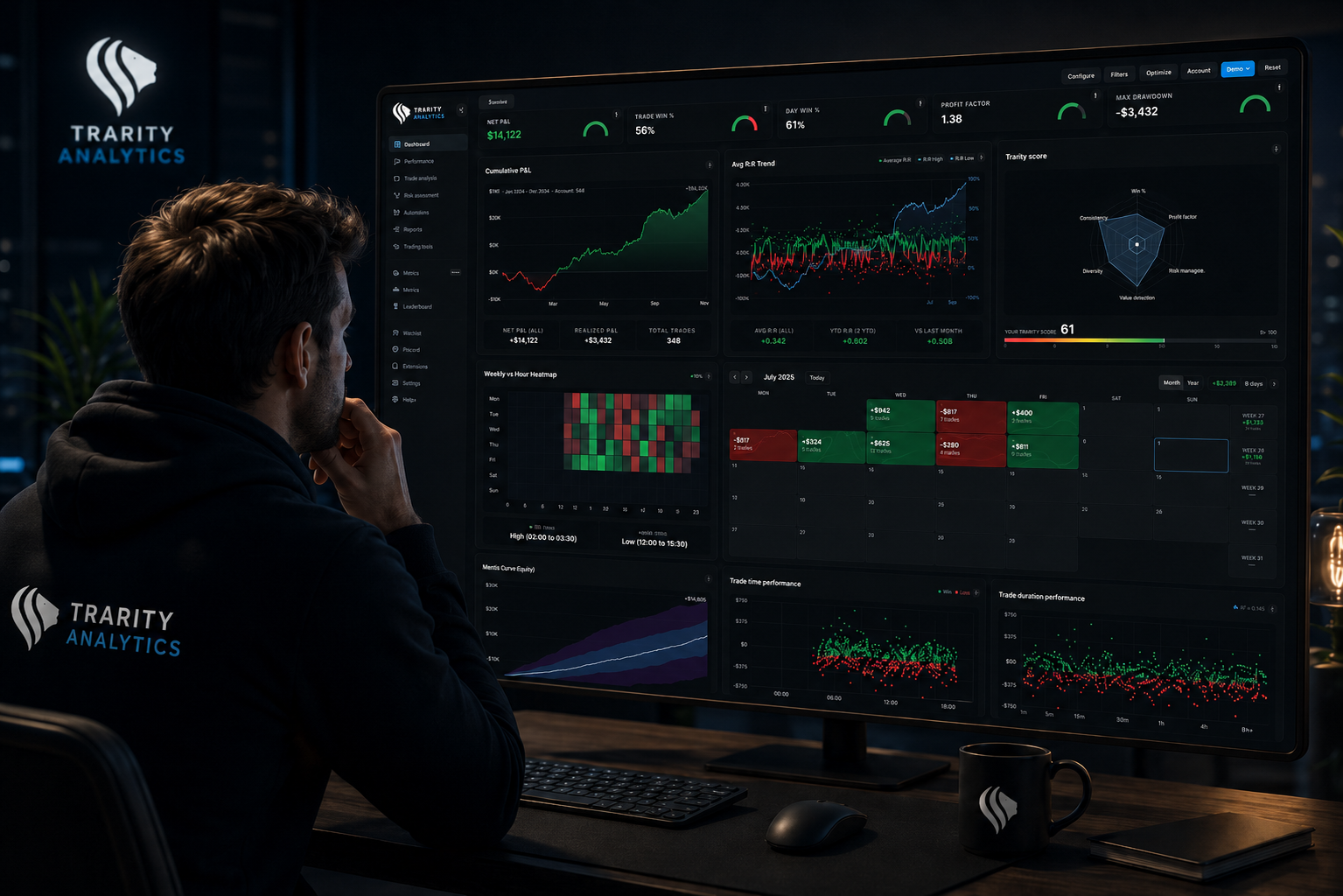
- Advanced trading analytics that surface patterns across hundreds of trades.
- An AI trading coach that gives personalized, actionable feedback on common mistakes.
- A powerful trade labeling system to filter by setups, emotions, and market conditions.
Start reviewing trades like a pro
Trarity imports your trades, calculates metrics, and surfaces patterns automatically. Full access for 30 days — no card required.
Start for free arrow_forwardFrequently Asked Questions
Review each trade within 24 hours while it's fresh. Do a weekly deep review to spot patterns, and a monthly review to assess overall performance.
A thorough trade review covers: setup validity, entry quality, exit execution, risk management, emotional state, and whether the trade followed your plan.
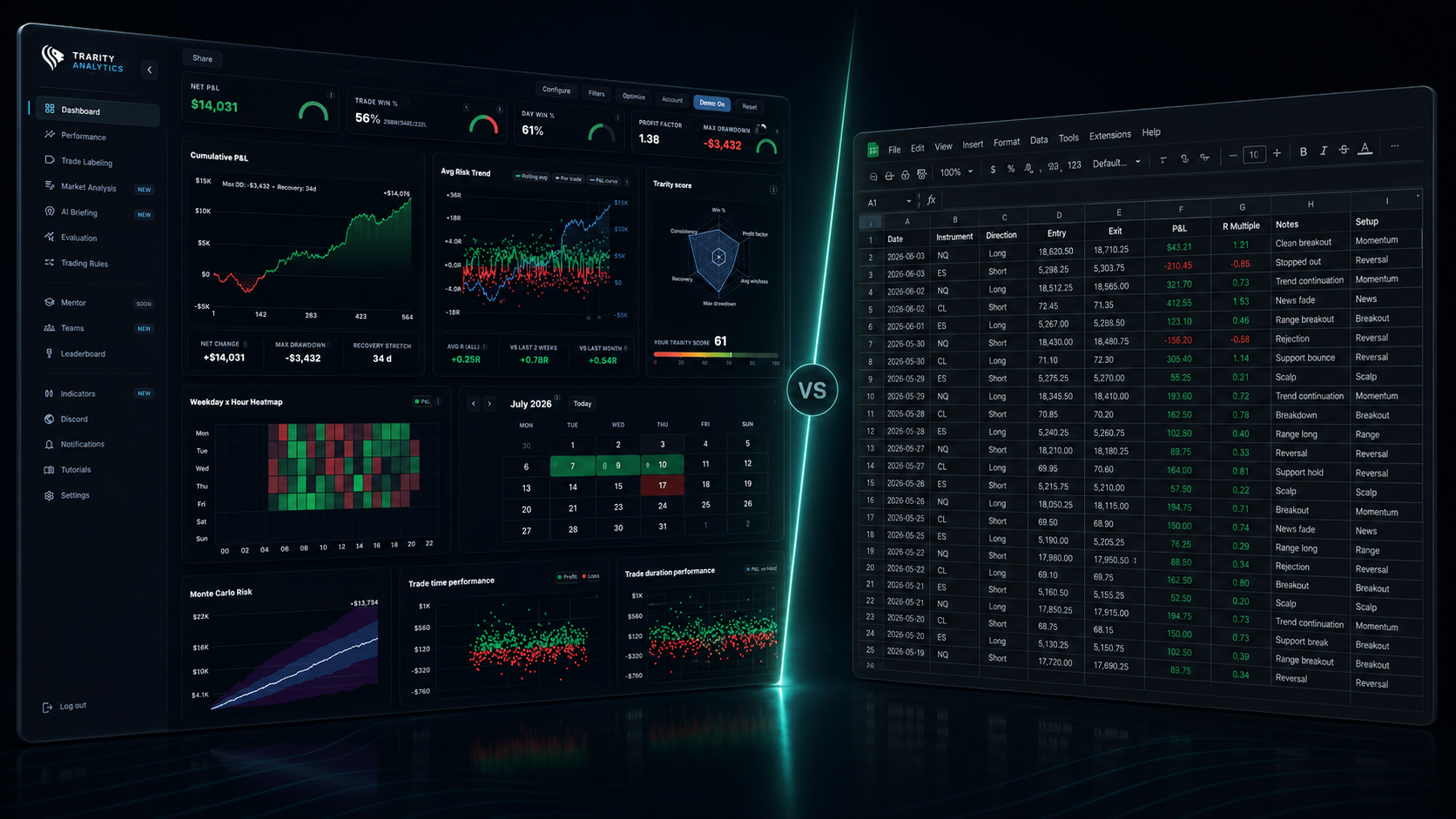
You can, but spreadsheets lack automation, analytics, and pattern recognition. A dedicated trading journal like Trarity automatically imports trades, calculates metrics, and uses AI to spot patterns you'd miss.
Most traders start seeing meaningful patterns after reviewing 20–30 trades. The key is consistency — reviewing every trade, not just the losers.
Post-trade analysis is the process of reviewing a completed trade to understand what worked, what didn't, and what you can improve. It's the foundation of continuous improvement in trading.
This article was created with the help of AI and reviewed and edited by the Trarity team.