Setup Tags
Track strategy intent with labels such as breakout, pullback, mean reversion, and range play.
With Trarity trade labeling, you can label your trades and tag your trades with organised trade setup tags and mistake tags so your journal becomes easier to analyse. This trade labeling workflow helps you review decisions clearly inside your trading journal and connect execution quality to outcomes.
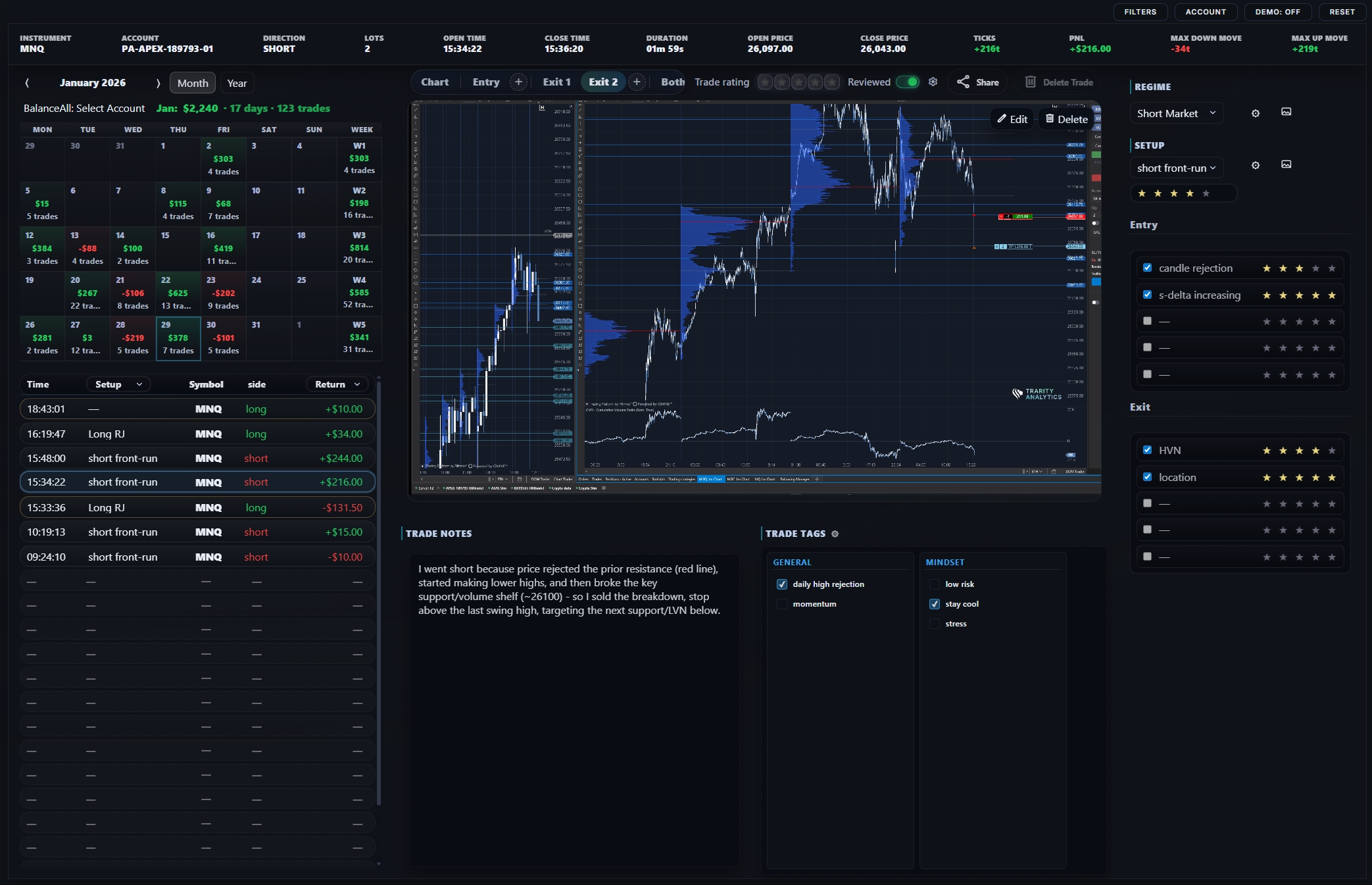
Trade labeling describes the process of attaching structured data to each position so your decisions are searchable later. Strong trade tagging uses consistent trading journal tags for setup type, mistake categories, psychology tags, and session context, making every review more objective.
When this data is organised, your trading analytics stops being guesswork and starts showing exactly where your edge appears and where your process breaks down.
If your journal has no structure, repeating behaviour hides in plain sight. Consistent trade labels make it simple to spot what to keep and what to remove from your process.
Start with a simple structure and keep names consistent. These four groups make your journal easier to filter, compare, and review over time.
Trarity works as a practical trading setup tracker and trading mistake tracker in one place. If you are learning how to tag trades or how to label trades consistently, templates make the process fast while still letting you personalise your categories.
Trade labels improve your trade review process because you can filter, sort, and cross-reference each decision quickly. By combining trading tags, trade tags, and setup performance data, your journal shows exactly which behaviour repeats in winning and losing periods.
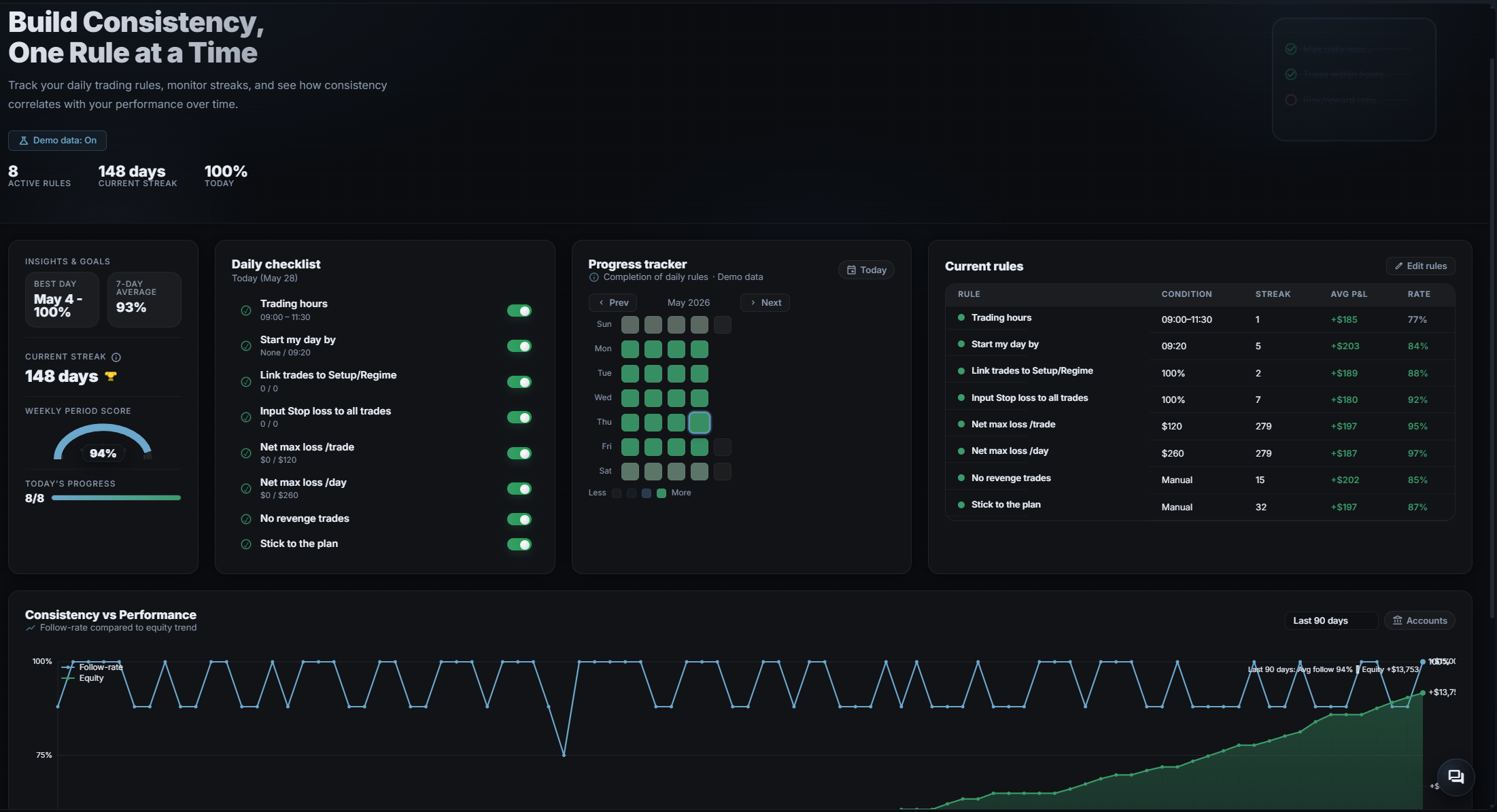
Labels make coaching sharper. When your journal is structured, the AI trading coach can surface patterns from your tags automatically and produce feedback that is specific to your setups, mistakes, and routines.
Use structured tags to improve every trade review and build a data-backed process in your journal.