A trader can be profitable this month and still be on the wrong side of variance. The only way to know if your process is sound is to track the right trading metrics. This guide covers the metrics that matter most — every one available in Trarity's dashboard — and how a trading performance dashboard turns them into decisions.
Win Rate
Win rate is the percentage of trades that close as winners. It is one of the first numbers traders check because it feels intuitive — but on its own it can be deeply misleading.
A system can run at 30% and still be profitable if winners dwarf losers — while a 90% win rate becomes a ticking time bomb when one oversized loss wipes out weeks of gains.
A trading journal app tracks win rate automatically across setups, sessions, and instruments. The key is sample size: win rate is meaningful only after enough trades, not after a short streak.
Profit Factor
Profit factor is gross profit divided by gross loss. Above 1.0 means your system is profitable; below 1.0 means losses outweigh gains. It is often more reliable than win rate because it captures the balance between what you make and what you give back.
For most retail traders, a profit factor between 1.5 and 2.0 is strong. Good trading analytics should always show profit factor next to win rate — never in isolation.
Average Winner vs Average Loser
This compares the size of your average win against your average loss. If your average loser is larger than your average winner, a high win rate will struggle to save you — the math eventually catches up.
Reviewing these numbers exposes two common leaks: taking profits too early, and letting losing trades run past your planned stop.
Maximum Drawdown
Drawdown is the largest peak-to-trough decline in your equity curve. It defines both capital stress and psychological stress. Many traders abandon valid systems during normal drawdown because they never measured what normal looks like.
Trading analytics software visualizes drawdown periods alongside your trade history, so you can separate temporary variance from structural problems.
"Most traders abandon a valid system during a perfectly normal drawdown — because they never measured what normal looks like."
Day Win Rate
Day win rate is the percentage of trading days that end net positive. A trader can win 60% of individual trades but still have losing days if losses cluster — day win rate catches exactly that pattern.
Day Streak
Day streak tracks your current consecutive winning or losing run, alongside your best and worst historical streaks. A long winning streak warns you to stay disciplined; a long losing streak signals it may be time to pause and review.
Exit Quality
Exit quality scores how well-timed your exits are, from 0 to 100. It goes beyond P&L: you can close a profitable trade and still have poor exit quality if you left significant gains on the table. Trarity calculates it automatically from post-exit price movement.
Setup Performance
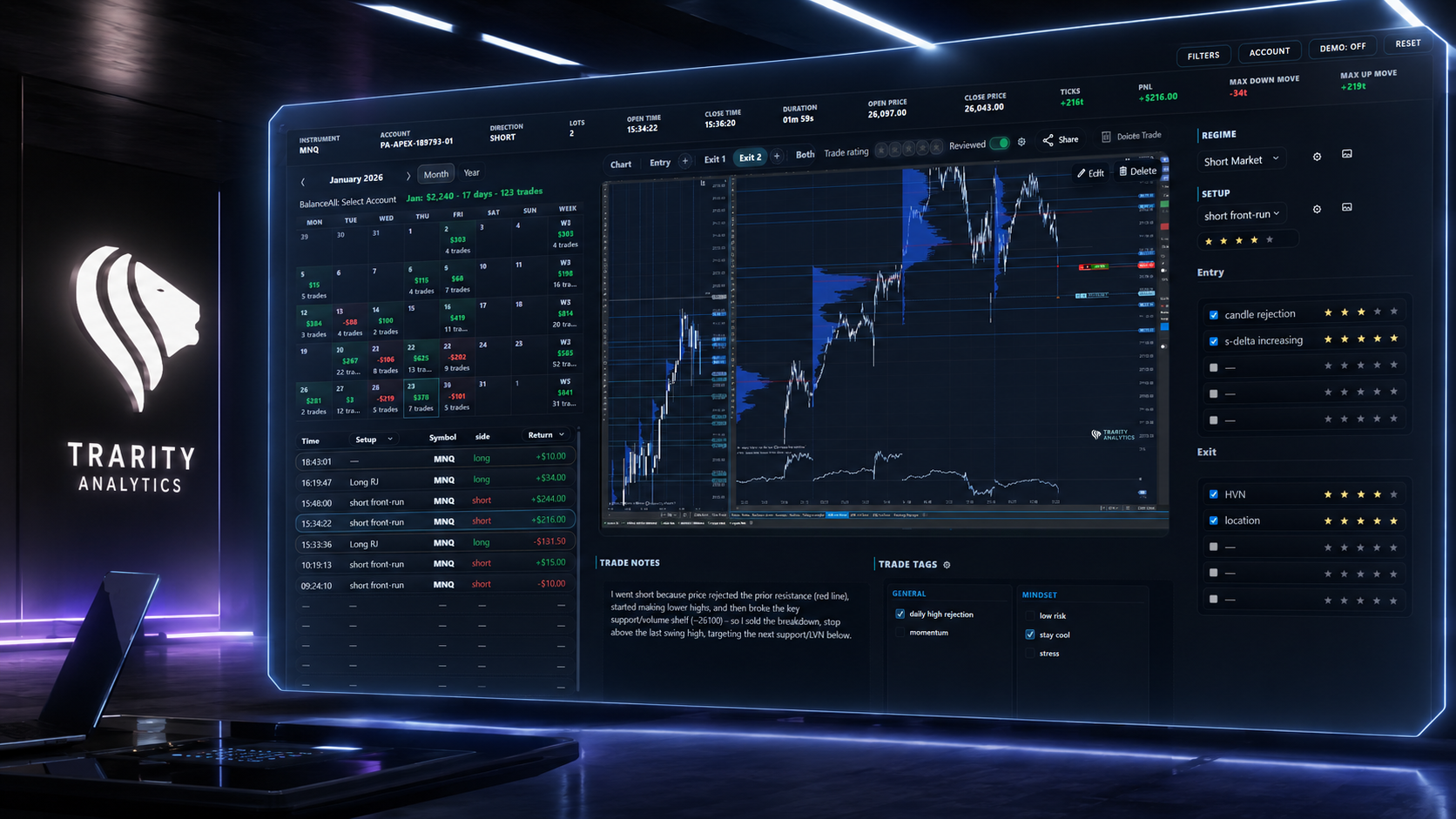
Setup performance segments metrics by setup type instead of pooling everything together — that is where strategy-level truth appears. When you tag each trade by setup, you can filter win rate and profit factor by label and see which patterns actually produce edge.
Why Metrics Need Context
A win rate of 45% means very little without context: risk-reward ratio, sample size, and market conditions. Metrics should be compared across time periods, setups, instruments, and emotional states. That comparison is where real improvement opportunities emerge.
Avoid optimizing for a single number. The goal is a holistic view where multiple metrics confirm the same edge story.
How a Performance Dashboard Helps
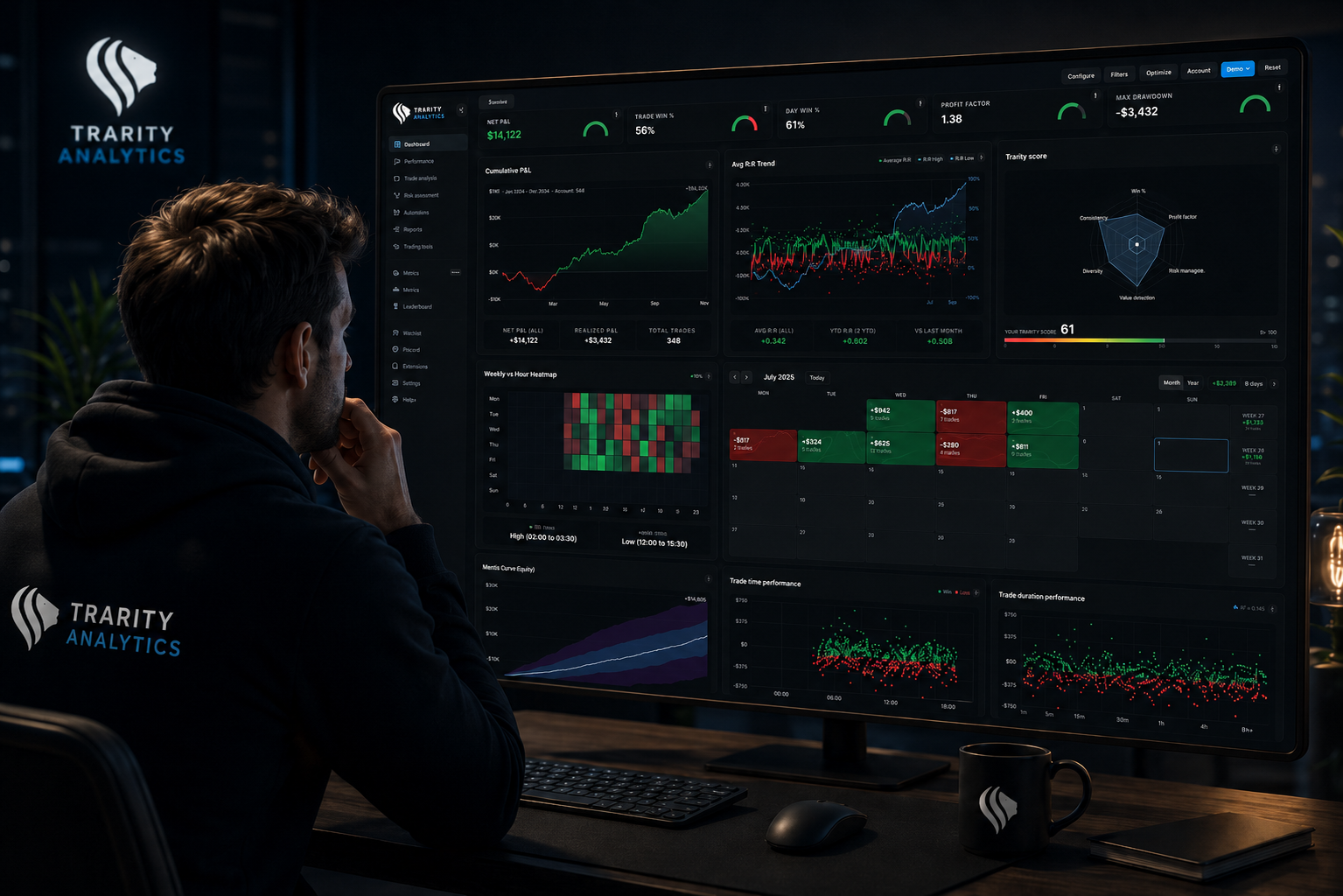
A performance dashboard centralizes your statistics so you move from raw logs to decisions quickly. Instead of calculating formulas by hand, it updates in real time as new trades are imported and categorized.
- 01Win rate shows how often you win — pair it with profit factor
- 02Profit factor reveals the balance between gains and losses
- 03Average winner vs loser exposes behavioural leaks
- 04Drawdown defines your worst-case risk
- 05Exit quality measures your timing precision
See these metrics on your own trades
Trarity imports your trades and computes win rate, profit factor, drawdown and exit quality automatically. Full access for 30 days — no card required.
Start for free arrow_forwardFrequently Asked Questions
There is no single most important metric. Win rate, profit factor, and average winner versus average loser work together to give you a complete picture. Focus on the combination rather than any one number.
Most trading statistics become meaningful after 30 to 50 trades with the same setup. Fewer than that and you are likely seeing noise, not signal.
A profit factor above 1.0 means you are profitable. Most consistently profitable retail traders sit between 1.5 and 2.5.
Use a trading journal app with automated trade import. Trarity calculates win rate, profit factor, drawdown, and exit quality from your imported trades — no manual formulas needed.
Exit quality scores how well-timed your exits are from 0 to 100. It measures how much the market reversed after you closed — a higher score means you captured most of the available move.
This article was created with the help of AI and reviewed and edited by the Trarity team.